
Where to start reading the city


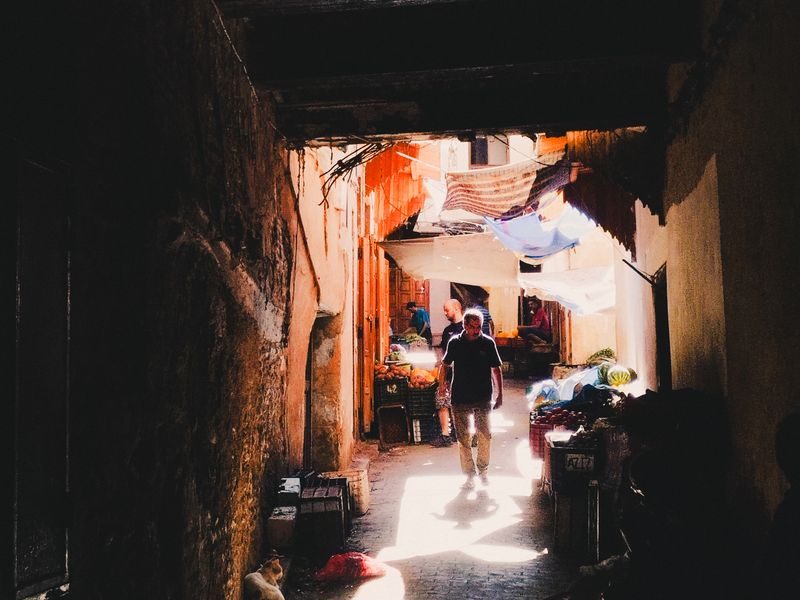
Fes has the world's largest car-free urban center. The Medina's 9,000 narrow streets are a time capsule, the scent of tanneries hangs in the air, pottery kilns have burned for centuries. Morocco's spiritual capital.
World's oldest university, largest medina
Al-Qarawiyyin, founded in 859, is the world's oldest university. Bou Inania Madrasa's tile work takes your breath. Watching the tanneries from the terrace is Fes's most iconic experience.
Getting lost in the Medina is part of the plan, hiring a guide is wise. Each street is dedicated to a different craft: copper, wood, leather, tile.
Pastilla, harira, and tea ritual
Pastilla (bastilla) is Fes's pride: pigeon meat with almonds and cinnamon in a sweet-savory union. Harira soup is Ramadan's staple but drunk daily. Msemen (Moroccan flatbread) stars every morning.
Candlelit dining at riad courtyard restaurants, mint tea on rooftop terraces. Eating in Fes is a ritual outside of time.
Neighborhoods and Where to Stay
Fes's old medina is essential for history enthusiasts, but navigating narrow alleys can be challenging. The Bab Guissa neighborhood, north of the medina, offers proximity to the action with a quieter experience. Ville Nouvelle is modern Fes, featuring wide streets, ATMs, and reliable reception services. Those seeking central lodging may prefer areas near Dar Batha museum, where structure is more orderly. Budget travelers will find affordable riad accommodations within the medina, though sleep quality and noise levels warrant consideration. For a more organized urban experience, the Nouvelle district is a practical choice.
How Many Days and Best Itinerary Flow
Three days is sufficient to understand Fes's essence. On day one, enter the medina early, starting with the Karaouine Mosque and university surroundings. In the afternoon, visit leather tanneries (hire a guide to see dye vats properly). On day two, explore pottery quarters, Dar Batha museum, and master workshops, then visit the historic Mellah Jewish quarter in the evening. On day three, discover lesser-known neighborhoods on foot or arrange a day trip to nearby Ifrane and Meknes. Account for the medina's physical demands; plan breaks mid-day and rest periods. This pace balances immersion with fatigue management.
Food Culture, Budget and Practical Tips
Fes cuisine is Morocco's most refined culinary art; harira, pastilla, and tagine define the city. A daily budget of 65 euros is comfortably manageable, especially when choosing local kebab vendors and fresh market produce. Dining within the medina attracts tourism pricing, but authentic master tables can be found with care. Water is straightforward: purchase bottled water and avoid tap water. Local tea is ubiquitous, and afternoon tea ritual sits at the heart of social life. For phones and currency, carefully compare local exchange rates against bank offerings, as bank rates are typically superior. August brings extreme heat and reduced activity; spring and autumn offer ideal visiting conditions.
Fes travel FAQ
When is the best time to visit Fes?
The best months to visit Fes are Mar-May, Oct-Nov.
Do I need a visa for Fes?
Visa status for Fes (Morocco): Visa-free.
How long is the flight to Fes?
The flight from Istanbul to Fes takes about 4.5 hours.
What is the nightly budget for Fes?
Nightly accommodation in Fes is around €50-100 (Affordable).
Tours and activities
Where to stay
Real prices and availability in Fes neighborhoods, book directly.
How you get there
Default origin: Istanbul. Change in profile.